


Quick answer
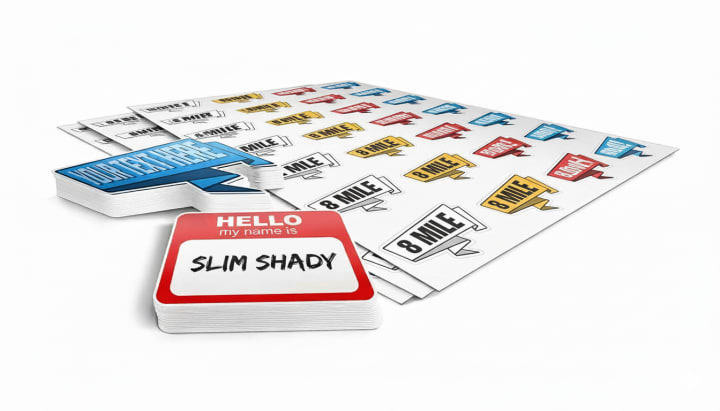
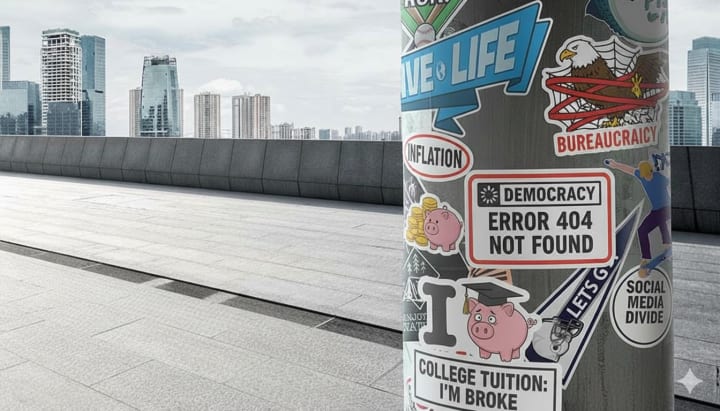
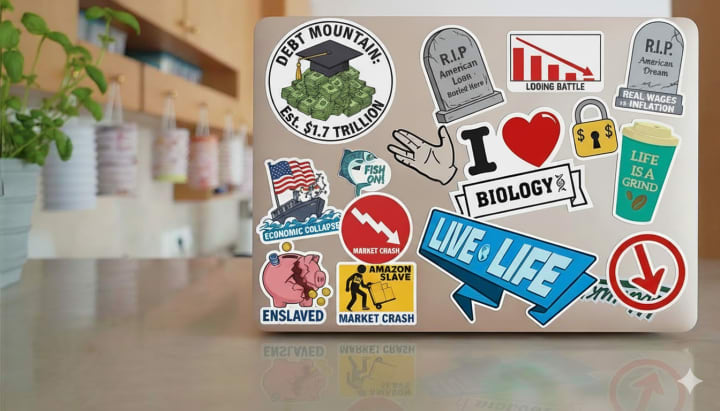
Direct answer: A die-cut sticker is trimmed through the face stock and backing to a custom outer shape. It is a good fit when individual pieces should follow a logo or illustration instead of arriving as rectangles. The customer supplies the final size, quantity, artwork, surface and exposure details; the quote confirms the material, finish, cut, supplied format, and pack-out.
Key takeaways
- Send vector artwork when possible, plus the finished width or height, bleed beyond the print edge, and safe spacing inside the contour; raster files need enough resolution at final size and a clear background.
- Identify the application surface and whether the stickers will face moisture, strong UV, salt air, cleaning chemicals, abrasion, or refrigeration.
- A useful production quote includes quantity, exact finished size, finish preference, artwork, target date, and whether pieces need a particular grouping, count, label, or pack-out.
Specs & options
Specs
- Material
- Pressure-sensitive vinyl selected for the surface and exposure
- Finish Options
- Available gloss or matte options confirmed with the selected material and written quote
- Cut Style
- Custom outer contour through the sticker and backing
- Faces
- One printed face with adhesive backing; reverse-read or double-sided construction is not implied
- Finished Size
- Specified by exact width or height; fine-detail limits reviewed at proof
- Exposure
- Indoor or outdoor conditions, moisture, UV, chemicals, and abrasion must be identified
- File Formats
- AI, EPS, SVG, or editable PDF preferred; high-resolution PNG or JPG reviewed case by case
- Quantity + Handoff
- Piece count, supplied format, grouping, and pack-out confirmed after artwork, size, material, and finish are reviewed
Options
- Gloss finish for a brighter, more reflective surface when compatible with the material.
- Matte finish for reduced glare and a softer appearance when compatible with the material.
- Simple outer contours or more detailed silhouettes, subject to minimum feature and spacing review.
- Custom finished dimensions based on the artwork, application area, and readable detail.
- Quantity and pack-out planned around handouts, packaging stations, retail use, or multi-location distribution.
Need help preparing files? See Artwork Setup.
Production inputs & handoff
Customer-supplied inputs
Final dimensions & specifications
- Exact finished width or height, quantity, number of artwork versions, intended surface, indoor or outdoor exposure, handling, cleaning, and removal expectations.
- State whether the finished order should contain individual die-cut pieces or another reviewed format, plus any count, grouping, or labeling requirement.
Artwork & production files
- Vector AI, EPS, SVG, or editable PDF artwork when available, with final colors and copy, fonts outlined, bleed, safe spacing, and an approved outer cut path.
- Raster artwork must be adequate at final size; tiny type, narrow bridges, interior gaps, sharp points, and intricate contours may require approved simplification.
Handoff requests
Installer handoff
- Finished individual stickers supplied only in the size, quantity, material, finish, and outer contour listed in the quote.
- Requested grouping, counts, version labels, or application-set organization can be reviewed before production and must be included in the approved scope.
Packaging & fulfillment
- Request bulk grouping, counted bundles, version separation, or labeled pack-out before quoting; only the accepted packaging and listed sticker quantity are supplied.
Not included
- Field or surface inspection, placement or adhesion approval, packaging-line setup, application crews, installation labor, and any fulfillment or transport service not itemized in the written quote.
- The customer remains responsible for final dimensions, substrate compatibility, tests, labeling or regulatory content, product placement, application conditions, cleaning, and removal.
Good fit for
- Product packaging — logo seals, branded inserts, and short-run promotional accents.
- Equipment identification — unit marks or ownership labels on compatible, clean surfaces.
- Promotional handouts — individually cut pieces for events, launches, and hospitality counters.
- Artist and maker merchandise — illustrations shaped for sale, mailers, or order extras.
- Laptop and device decoration — personal graphics sized around ports, edges, and cases.
- Vehicle or window accents — small graphics specified for the actual surface and outdoor exposure.
How it works
-
1) Define the production brief
Share the customer-verified surface, indoor or outdoor exposure, exact finished size, quantity, finish preference, supplied-format and pack-out needs, target date, and color requirements.
-
2) Upload production artwork
Send vector artwork with fonts outlined when possible. Include a proposed cut path or let the design review identify a practical contour and border.
-
3) Review the proof
Approve the finished dimensions, color appearance, cut line, edge spacing, material, finish, quantity, and any artwork adjustments before production.
-
4) Produce + hand off
The stickers are printed, contour cut, finished, counted, and packaged only as listed in the quote. The customer handles final surface verification, placement, application, and removal.
FAQ
What file formats work best for die-cut stickers?
Vector AI, EPS, SVG, or editable PDF files usually provide the cleanest contours. High-resolution PNG or JPG artwork can be reviewed at final size. Include transparent space around the design or clearly identify the intended outer cut line.
What sizes are available?
Finished size is quoted from an exact width or height. Very small text, points, gaps, and intricate edges may need simplification, so send the artwork and intended application for a production review.
How long do die-cut stickers last?
Service life depends on the vinyl, ink and finish, application surface, edge shape, UV orientation, salt air, moisture, abrasion, cleaners, and handling. State the expected environment so the quote can recommend an appropriate construction without promising a fixed lifespan.
How do I apply die-cut stickers properly?
The customer applies the stickers. Start with a customer-verified smooth, compatible surface free of dust, oil, wax, and moisture, then follow the material-specific cleaning, temperature, pressure, and cure guidance. LA Prime Signs does not provide application labor or guarantee adhesion to an unverified surface.
What's the difference between die-cut stickers and traditional labels?
A die-cut sticker is cut through both the printed material and backing to its outer shape. A kiss-cut piece keeps the sticker on a larger backing, while roll labels are commonly planned for dispensing and packaging workflows. The right format depends on how the pieces will be handled and applied.
Can I order just one sticker?
Minimums and economical quantities depend on finished size, material, finish, and production setup. Include the quantity you actually need; the quote can confirm feasibility and useful quantity breaks without assuming a minimum.