The story Rigid Enough To Stand Out, Light Enough To Move

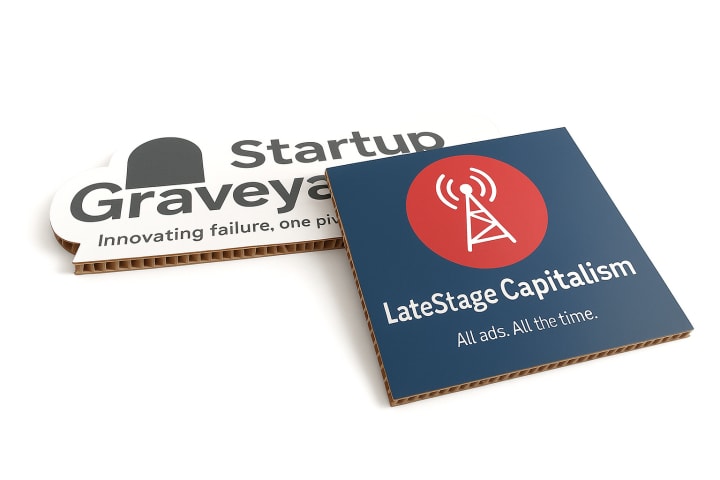
A large display graphic does not always need a heavy panel. Falconboard uses a honeycomb core to create depth and rigidity with comparatively little weight, which is useful for retail displays, exhibit graphics, and event pieces that move between setups.

The smooth faces accept detailed full-color graphics, while the thicker edge gives the panel more presence than poster board. That same paper construction is the key limitation: moisture, impact, and rough edge handling can shorten its useful life.

Plan the artwork at final size. Keep logos and essential copy away from trim lines, and make small text large enough for the actual viewing distance rather than judging it only on a monitor.

Hanging pieces need a customer- or installer-approved hole layout and hardware appropriate for the panel size. Freestanding panels need a customer-selected easel, slot, base, or display structure that supports the board without concentrating too much pressure in one spot.

If the sign will face weather, frequent cleaning, high heat, or repeated rough handling, another substrate may be a better fit. Choosing that before printing is cheaper than asking a paper panel to behave like an outdoor sign.

Quick answer

Direct answer: Falconboard is a rigid graphics panel built from paper liners around a honeycomb paper core. It is best suited to dry indoor displays that need more structure than poster stock but less weight than many plastic, wood, or composite panels.

Key takeaways

  • Use it indoors and keep it away from rain, condensation, wet floors, and prolonged direct sun.
  • Faces and edges can dent or crush, so handling, transport, storage, and mounting all affect service life.
  • For a production quote, provide customer-verified finished size, quantity, approved artwork, printed sides, cut shape, edge treatment, and any exact hole locations.

Specs & options

Specs

Material
Falconboard-brand or comparable paper honeycomb display board identified in the quote
Thickness
Selected from quoted stock to suit panel dimensions, orientation, and support
Weight
Lightweight relative to many rigid plastic, composite, or wood panels
Core Options
Core color and construction identified for the quoted board; availability varies
Print Method
Full-color production method identified for the quoted panel and finish
Handling
Rigid and flat, but faces and edges can dent, scratch, or crush
Storage
Store flat in a clean, dry, climate-controlled space
Environment
Dry indoor use; not intended for rain or sustained moisture

Options

  • Standard rectangles, circles, ovals, or contour-cut shapes based on supplied artwork.
  • Rounded corners with the radius confirmed during proofing.
  • Two-sided printing with the same or different artwork on each face.
  • Drilled hanging holes positioned from an approved dimensioned layout.
  • Optional surface protection when compatible with the print and recycling priorities.

Need help preparing files? See Artwork Setup.

Good fit for

  • Trade-show graphics and exhibition displays.
  • Retail signs, point-of-purchase displays, and promotional cutouts.
  • Dry indoor event signs, directional panels, and hanging graphics.
  • Lightweight kiosk skins, dimensional props, and multi-panel display structures.

How it works

  1. 1) Define the display

    Send customer-verified final dimensions, quantity, artwork, printed sides, cut shape, viewing distance, use environment, and any approved hole layout.

  2. 2) Prepare + proof artwork

    Vector PDF or AI artwork is preferred for logos and cut paths; high-resolution raster images should be supplied at final print size. You approve the layout and trim before production.

  3. 3) Print + cut

    Graphics are produced with the quoted print method, then trimmed, shape-cut, or drilled according to the approved proof.

  4. 4) Pack + hand off

    The finished panels are inspected and protected for handoff. Hardware is included only when selected, specified, and listed in the written production quote.

FAQ

What is Falconboard?

Falconboard is a rigid graphics material made with coated paper faces over a paper honeycomb core. It is intended for lightweight indoor signs and display structures.

Is Falconboard sturdy or paper-based?

Both. The honeycomb geometry gives the paper construction useful panel stiffness, but it can still dent, crush, or absorb moisture if handled like a permanent hard substrate.

What holds the material together?

The paper honeycomb core is bonded between smooth printable liners. The structure spreads load across the panel, while the faces provide a surface for direct printing.

How is this different from printing on cardboard?

Falconboard is thicker, flatter, and more rigid than ordinary corrugated shipping cardboard. It is made as a graphics substrate, so its faces are better suited to detailed display printing.

Can I print on both sides of a Falconboard display?

Yes. The two faces can carry the same or different artwork. Tell us whether the panel will hang, stand, or slot into a fixture so the orientation and hole placement match both sides.

What's the difference between Falconboard and corrugated plastic or foam board?

Falconboard has a paper honeycomb core and is intended for dry interiors. Corrugated plastic tolerates moisture better, while foam board is thin and light but can dent. Required rigidity, edge appearance, handling, and exposure should drive the choice.

Are Falconboard signs fine for outdoor use?

No. The paper-based panel is not intended for rain, irrigation, condensation, or sustained outdoor humidity. Ask for a weather-suitable substrate when the sign will be outside.

How long do Falconboard displays last?

There is no single lifespan. Indoor climate, sunlight, handling frequency, edge protection, mounting pressure, and storage determine how long the display stays presentable.

Is Falconboard an environmentally friendly material?

Its paper-based construction can reduce plastic content, but recyclability depends on local facility rules and any inks, coatings, laminates, adhesives, or added hardware. Confirm acceptance with the recycler that will receive it.

How many colors can I use on Falconboard displays?

Full-color process printing can reproduce photographs, logos, gradients, and mixed-color layouts. Critical brand colors should be identified in the artwork and reviewed during proofing.

Can I provide my own Falconboard artwork?

Yes. Supply a print-ready vector PDF or AI file when possible, with fonts outlined and bleed included. Raster images should be high resolution at the final output size.

Are these signs heat resistant?

Falconboard is intended for normal indoor display conditions, not high heat or prolonged direct sun. Heat and uneven humidity can affect the paper faces and panel flatness.

Is there a laminate finish covering the printed part of these signs?

Lamination is not assumed. If added surface protection is important, request it in the quote so compatibility, finish, handling needs, and recycling priorities can be reviewed.

Can I customize the drill holes in Falconboard displays?

Yes. Supply and approve the exact hole diameter and center locations, panel orientation, and intended hardware. Holes should stay far enough from edges to avoid tearing or crushing the paper core; mounting design remains the customer or installer’s responsibility.

Can I build 3D displays using Falconboard?

Falconboard can form lightweight kiosks, props, and multi-panel structures when slots, folds, supports, and loads are planned for the material. It should not be treated as structural furniture.

Are Falconboard signs strong enough to hold heavy objects?

No. The board is a graphics and light-display material, not a weight-bearing shelf or structural panel. Use a separate engineered support for objects.

Where can I mount Falconboard displays?

Common approaches include easels, display slots, installer-selected removable adhesive, hook-and-loop fastener, and hanging hardware through approved holes. The customer or installer verifies the receiving surface, attachment, load, permission, and safe placement.

Do I need to worry about denting, fading, warping, or scratching?

Yes. Faces and edges can dent or scratch, moisture can warp the paper construction, and direct sun can affect printed color. Careful handling and dry, flat storage matter.

What are the best uses for custom Falconboard signs?

It fits dry indoor retail displays, point-of-purchase graphics, event directions, promotional cutouts, hanging signs, and trade-show panels that benefit from rigidity without much weight.

Are Falconboard displays reusable?

They can be reused when the message remains current and the panels are handled gently. Removable mounting and protective transport make reuse more practical.

How should I store my displays when not in use?

Store panels flat in a clean, dry interior space. Keep liquids, high humidity, sharp objects, direct sun, and heavy stacked items away from the faces and edges.

How do I install Falconboard signs?

This is a customer or third-party-installer decision. Common display approaches include an easel, slot, removable wall attachment, or approved hanging holes based on size and weight. The installer should test adhesives on the receiving surface and avoid hardware that concentrates force near an edge.

Will I need someone to help me with installation?

The customer decides and arranges installation. Large, elevated, ceiling-hung, or precisely aligned pieces require appropriate access and safe handling by a qualified installer; LA Prime Signs does not provide labor, access coordination, or site verification.

What arrives with a Falconboard sign order?

The finished order contains the approved printed panels with the quoted sides, cut shape, edge treatment, and selected drilling, protected for handoff. Field measurements, site surveys, mounting design, permits, code compliance, access, and installation are not included.

Production parent

See commercial printing for approved-file preparation, rigid printing, cutting, and production handoff.