


Quick answer
Direct answer: A We Are Open sign is an announcement that a business has opened, reopened, relocated, or resumed service. Choose the format from the actual placement, viewing distance, display period, exposure, mounting or hardware, and whether the message will be reused or updated.
Key takeaways
- This page is for a launch or reopening announcement; a recurring open/closed system belongs on the daily-use Open Signs for Business page.
- A portable sign is not automatically approved or stable outdoors. Confirm the allowed footprint, pedestrian clearance, ballast, wind limits, setup routine, and storage plan.
- For a quote, share exact wording, dates, logo files, dimensions, quantity, sides, placement photos, viewing distance, exposure, duration, hardware, property criteria, and required in-use date.
Specs & options
Specs
- A-frame signs
- Portable frame and replaceable insert sized for the approved footprint, viewing sides, ballast, handling, and storage
- Rigid panels
- Substrate, thickness, edges, print faces, holes, and mounting selected for the size and exposure
- Vinyl banners
- Flexible display specified with finished size, sides, hems, grommets or pole pockets, support points, and wind plan
- Interior boards
- Lightweight protected-display stock for windows, counters, easels, frames, and temporary interior placement
- Yard signs
- Short-term corrugated-plastic display with stake, soil, utility, wind, permission, and setback conditions reviewed
- Window graphics
- Cut lettering, printed vinyl, clear film, perforated film, or cling chosen from customer-supplied glass, viewing direction, duration, and removal requirements
- Finished order
- The approved graphic, panel, insert, banner, or other selected format; frames and hardware only when listed in the written estimate
Options
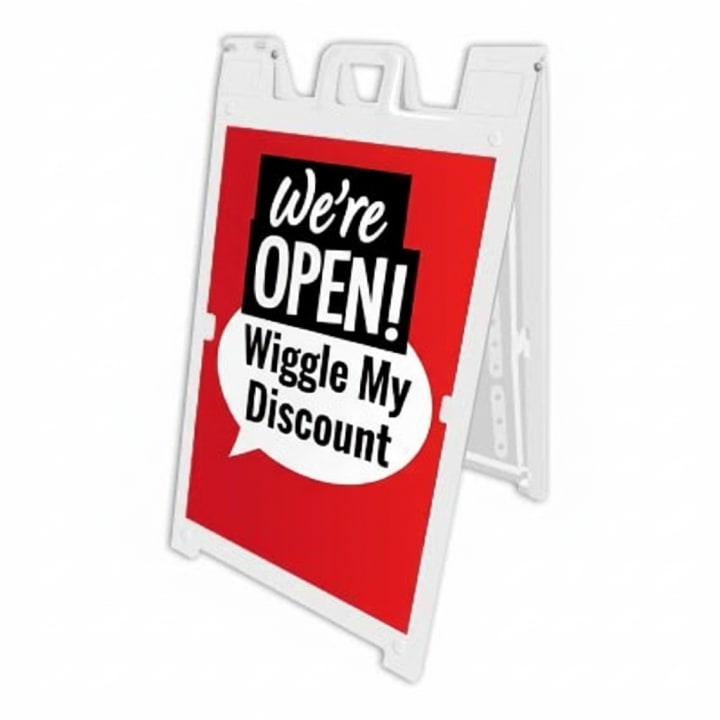
- A-frame insert — portable announcement near an approved entrance with daily setup and storage.
- Rigid panel — mounted to a compatible wall, post, frame, or stand with hardware and property approval defined.
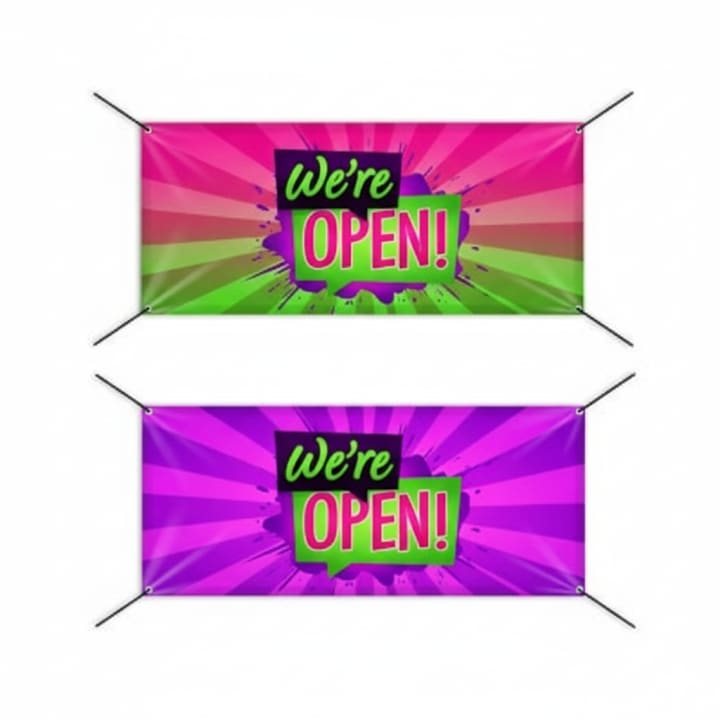
- Vinyl banner — large temporary message for a measured facade, railing, wall, or frame with distributed attachment.
- Interior display board — protected sign for a counter, easel, window, lobby, or pop-up fixture.
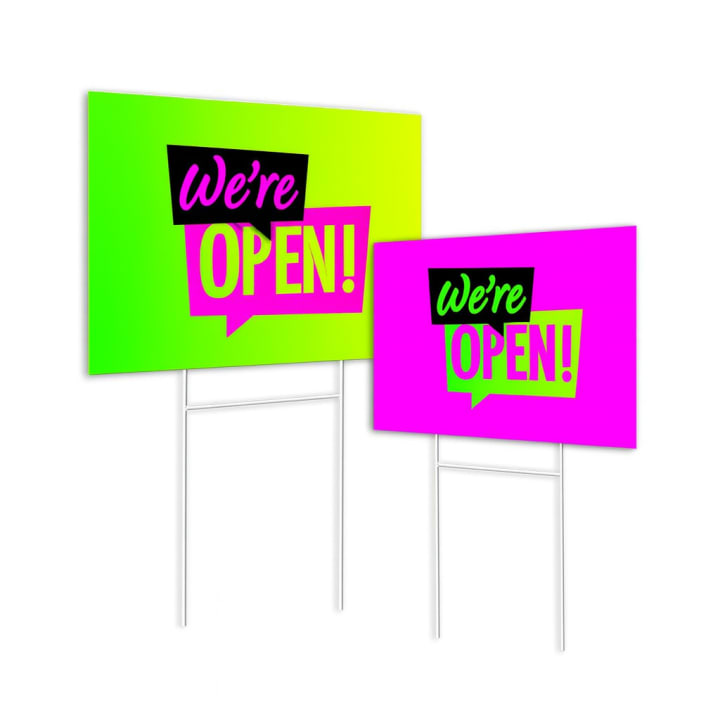
- Yard sign — short directional or opening message only where staking and placement are permitted and safe.
- Mesh banner — considered for certain open supports, while attachment and wind loads still require planning.
- Window decal — eye-level announcement selected around customer-supplied glass, tint, viewing side, application side, and removal requirements.
- Feather banner — portable fabric-and-hardware system with site permission, clearance, wind, ballast, and storage reviewed.
Need help preparing files? See Artwork Setup.
Production inputs & handoff
Customer-supplied inputs
Final dimensions & specifications
- Supply customer- or installer-verified final dimensions, quantity, orientation, printed sides, and display duration for each announcement piece.
- Identify the approved location, viewing distance and direction, surface or support, exposure, frame, hardware, holes, attachment points, or stake specification.
- Verify property permission, pedestrian clearance, structural suitability, utilities for staking, permits, and all placement requirements before production.
Artwork & production files
- Provide exact approved opening, reopening, relocation, entrance, and date wording plus logo files and brand colors.
- Supply vector PDF, AI, EPS, or SVG artwork when available and approve message accuracy, hierarchy, contrast, orientation, safe margins, and every printed face.
Handoff requests
Installer handoff
- The finished order contains the approved graphic, panel, insert, banner, or other format and only the frame or hardware expressly listed in the written estimate.
- The customer or qualified installer verifies field fit and handles mounting, window application, staking, ballast, setup, daily monitoring, storage, removal, and installation.
Not included
- Site surveys, field measurements, glass or substrate testing, placement selection, permit handling, and property, code, or accessibility review.
- Mounting design, structural or utility decisions, window application, banner hanging, staking, setup, installation labor, and installer scheduling.
- On-site troubleshooting, removal, repair, maintenance, or a guarantee of outdoor service life.
Good fit for
- New storefronts and relocations announcing an opening date or first week of operation.
- Businesses reopening after construction, remodeling, seasonal closure, or a temporary interruption.
- Pop-ups and temporary counters that need an approved, portable announcement at the active entrance.
- Restaurants, cafés, retail, studios, and offices clarifying that the location is ready for customers.
- Directional opening signs used only where property permission, visibility, pedestrian clearance, and placement rules allow.
How it works
-
1) Define the announcement
Provide exact opening or reopening wording, dates, entrance or directional details, logo files, colors, quantity, desired size, sides, and the required in-use date.
-
2) Supply verified display inputs
Send placement photos, customer-verified final dimensions, viewing distance, indoor or outdoor exposure, display duration, customer-approved support points or hardware, and property criteria.
-
3) Approve artwork + specification
Review message accuracy, type hierarchy, contrast, safe margins, material, finishing, sides, orientation, hardware, mounting, and any changeable information.
-
4) Produce + hand off
The approved announcement is printed, cut, and finished to the written specification. The customer or qualified installer verifies fit and handles placement, mounting, setup, storage, removal, and installation.
FAQ
What is an open for business sign?
It announces that a business has opened, reopened, relocated, or resumed service. The message can appear on a window graphic, banner, rigid panel, A-frame insert, yard sign, or another approved display selected for the location.
How does an open sign for business work?
It removes uncertainty by putting a short, accurate announcement on the customer’s approach. The sign should be visible from the intended distance without blocking sightlines, accessibility, doors, or pedestrian movement, and its placement must be permitted by the property and current rules.
Can I customize these signs for my business?
The wording, logo, colors, layout, size, sides, and format can be scoped to the project. Send approved copy and usable artwork; the design may need simplification so “We Are Open” and any date or direction remain the clear first read.
What to say instead of "we are open for business"?
Possible alternatives include “Now Open,” “Reopening [Date],” “New Entrance,” “Open During Construction,” “Walk-Ins Welcome,” or a short pickup or appointment instruction. Use only language that is accurate for the operating status and easy to update when it changes.
Can these signs stay outdoors?
Outdoor suitability depends on the full display: material, print or film, edges, hardware, attachment or ballast, wind, UV, heat, moisture, salt exposure, duration, setup, and maintenance. A portable frame or “outdoor” substrate is not a blanket safety or performance guarantee.
How long do open signs for business last?
Service life depends on material, print or film, construction, exposure, handling, storage, cleaning, attachment, and how long the message remains current. Define the intended display period and reuse plan so the sign is not overbuilt or under-specified.
Who handles setup or installation?
The customer or a qualified installer handles placement, setup, window application, staking, mounting, ballast, storage, removal, and installation. A-frames, yard signs, banners, mounted panels, and window graphics each require a method compatible with the verified site and current rules.
Are they safe for the environment?
Impact depends on material composition, ink or film, local recycling acceptance, transport, durability, and reuse. Replaceable inserts, reusable hardware, accurate quantities, date-free artwork when appropriate, and careful storage can reduce unnecessary replacement.