

Quick answer
Direct answer: A video surveillance sign identifies an area associated with cameras or recording. It should use accurate, legible wording and a substrate, size, mounting method, and placement suited to the site. The property or system operator must verify what notice is required and whether every claim on the sign is true.
Key takeaways
- The sign is communication, not a camera, alarm, monitoring service, or promise of security. Do not make it carry claims the system cannot support.
- Use high contrast and short primary wording; place contact, policy, or secondary detail at a size appropriate to the intended reading distance.
- For a quote, send exact approved text, logo and colors, quantity, dimensions, viewing distance, one- or two-sided need, site photos, surface, exposure, holes or hardware, and required in-use date.
Specs & options
Specs
- Material
- Rigid aluminum composite, aluminum, PVC, or another substrate selected for the approved placement and exposure
- Thickness
- Chosen from current stock based on finished size, support spacing, edge condition, wind, hardware, and access
- Graphics
- One- or two-sided full-color layout with exact customer-approved wording and symbols
- Finish
- Surface, edge, corner, and optional protective treatment selected around viewing, handling, and environment
- Mounting
- Holes, posts, brackets, frames, ties, or adhesive systems whose compatibility and load suitability are confirmed for the actual support by the responsible qualified party
- Exposure
- Indoor, sheltered, or exterior specification with UV, heat, moisture, salt, wind, cleaning, and service-life variables documented
- Compliance
- Wording, standards, dimensions, and placement supplied or verified by the responsible customer; no legal sufficiency guarantee
- Finished order
- Printed and finished sign panels with only the holes, hardware, or other items expressly listed in the written estimate
Options
- Custom size based on viewing distance, text length, mounting area, property criteria, and available stock.
- One-sided wall mounting or two-sided post, fence, or projecting display when the support and approach require it.
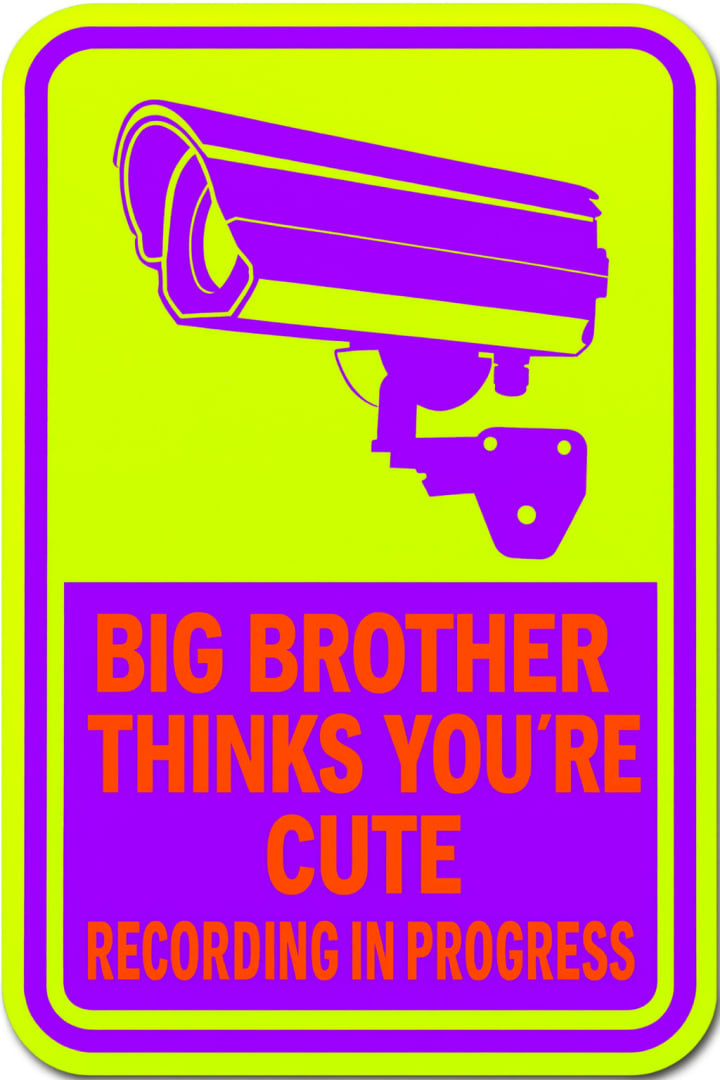
- Square or rounded corners selected from exposed-edge safety, artwork, hardware, and production constraints.
- Pre-drilled holes located only after fastener, edge clearance, support spacing, and mounting pattern are confirmed.
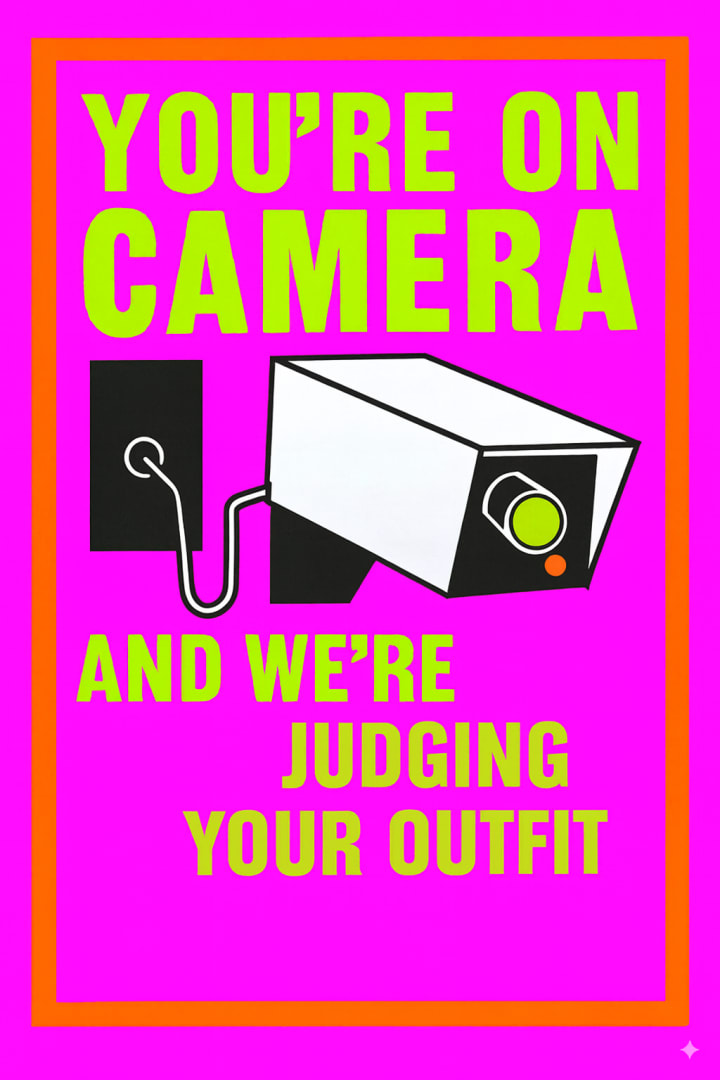
- Logo, brand colors, camera symbols, and secondary instructions without weakening the primary notice.
Need help preparing files? See Artwork Setup.
Production inputs & handoff
Customer-supplied inputs
Final dimensions & specifications
- Supply customer- or qualified-advisor-approved final width, height, thickness, quantity, sides, corner treatment, and hole or mounting pattern.
- Provide the approved placement schedule, approach direction, viewing distance, mounting height, support details, lighting, obstructions, and indoor or outdoor exposure.
- Identify the property, privacy, regulatory, code, and accessibility standards the responsible operator has approved for the specific use.
Artwork & production files
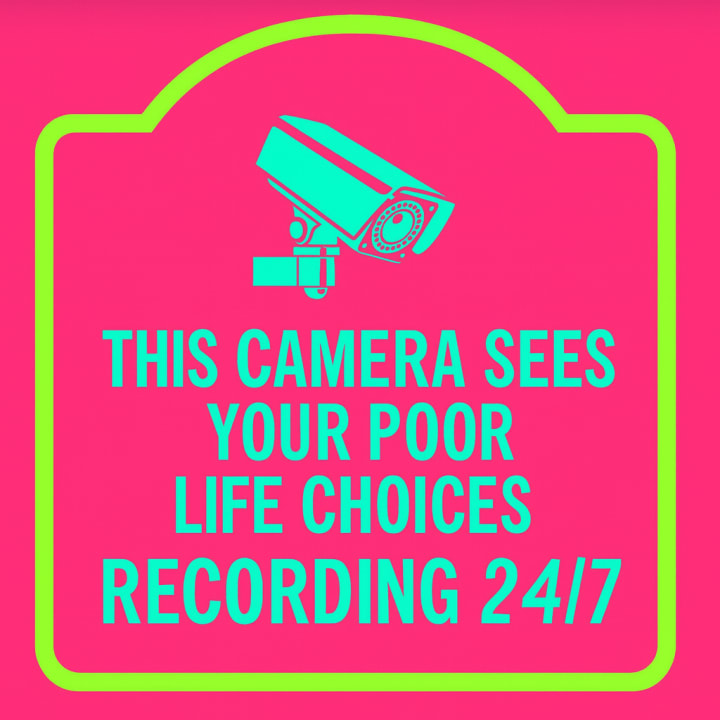
- Provide exact approved wording and confirm that every video, audio, monitoring, operating-hours, security-response, or 24/7 statement is true.
- Supply approved symbols, translations, contact or policy text, logo files, colors, and vector artwork when available.
- The responsible operator approves content accuracy, hierarchy, dimensions, standards, and placement; a production proof is not a legal or compliance review.
Handoff requests
Installer handoff
- The finished order contains the printed and finished sign panels plus only the approved holes, hardware, or other items expressly listed in the written estimate.
- The customer or qualified installer verifies field fit, mounting design, structural suitability, placement, visibility, and current requirements before installation.
Not included
- Legal, privacy, security, regulatory, code, or accessibility advice, system design, monitoring, cameras, alarms, or a compliance guarantee.
- Site surveys, field measurements, placement decisions, mounting design, structural review, permits, installation labor, and installer scheduling.
- On-site troubleshooting, repairs, maintenance, inspections, or security and deterrence guarantees.
Good fit for
- Business entrances and loading areas where an approved recording notice must be visible on approach.
- Parking entries, garages, and lots with site-specific viewing distance and lighting.
- Warehouses, service areas, and controlled-access spaces with documented mounting conditions.
- Office, residential, school, or community properties using wording approved by the responsible operator.
- Interior doors, counters, and lobbies that need a smaller protected notice rather than an exterior panel.
How it works
-
1) Verify the message
Provide exact approved wording and confirm that every statement about video, audio, monitoring, operating hours, or recording accurately describes the system and current requirements.
-
2) Supply approved dimensions + placement
Share final dimensions, quantity, viewing distance, approach direction, surface or post details, mounting height, approved placement schedule, indoor or outdoor exposure, lighting, obstructions, and reference photos.
-
3) Approve artwork + build
Review text, symbols, logo, colors, type size, sides, material, thickness, corners, holes, hardware, safe margins, orientation, and installation responsibility.
-
4) Produce + hand off
The approved sign panels are printed, cut, drilled, and finished only as listed in the written estimate. The customer or qualified installer verifies the site and completes placement, mounting, and installation.
FAQ
Are these weatherproof?
No sign should be called weatherproof without defining the complete build and site. Substrate, print or film, edges, penetrations, fasteners, support, UV, heat, moisture, salt, wind, cleaning, and maintenance all affect exterior performance.
What's the standard thickness?
There is no universal thickness for every surveillance sign. Finished size, substrate, support spacing, mounting holes, wind, exposed edges, handling, and current stock determine the appropriate panel.
Will Dibond rust?
Dibond is a brand of aluminum composite material, and aluminum faces do not behave like bare steel, but edges, coatings, fasteners, dissimilar metals, penetrations, salt exposure, and the support system still require appropriate specification and inspection.
Single or double-sided?
Use one side when the sign mounts flat to a wall or only one approach needs notice. Consider two sides for a suitable post, fence, or projecting location only after orientation, opacity, support, wind, and property criteria are confirmed.
How do I mount them?
A qualified installer should select the method from the panel material and size, wall or post construction, loads, edge clearance, penetrations, removal goals, and access. Provide the approved hole pattern and hardware specification for production; do not assume tape, ties, or generic screws are appropriate for every surface.
Do I need rounded corners?
Rounded corners may reduce exposed points and suit some artwork, but radius, edge clearance, hardware, panel material, and location should be reviewed together. They do not replace safe mounting or edge placement.
Can I use bright colors?
Yes, subject to the selected print process and brand or property criteria. Contrast between message and background matters more than brightness alone; review the proof at the intended size and viewing conditions.
What text should I include?
Use short, truthful, customer-approved language such as “Video Recording in Use” when accurate, plus only the symbols or secondary information the operator has verified. Never print a 24/7, audio, live-monitoring, or security-response claim by default.
Are these legally required?
Requirements can vary by location, property type, recording practices, audio use, placement, and current law. The responsible operator should obtain appropriate legal or compliance guidance; a sign printer cannot guarantee that generic wording is required or sufficient.
How long will prints last?
Service life depends on substrate, print or film, orientation, UV, temperature, moisture, salt, abrasion, cleaning, edge protection, mounting, and maintenance. Those variables should be reviewed instead of relying on a fixed outdoor-year claim.
Can I clean them?
Use care instructions compatible with the selected face, ink, film, laminate, substrate, and edges. Test a small area, use soft tools, and avoid abrasives, aggressive solvents, or pressure that can damage graphics or force moisture into the panel or mounting.