
How to Remove Wrinkles from Vinyl Banners Safely
Most light banner wrinkles respond to patience, mild warmth, and even tension. Deep folds, damaged ink, and aggressive heat are different problems—and sometimes replacement is the cleaner answer.
Key takeaways
- Check the printer or material maker’s care guidance before applying heat; banner films, inks, seams, and finishes do not all react the same way.
- Start with even hanging tension and gentle ambient warmth. Stop if the print becomes tacky, glossy, distorted, or discolored.
- A hair dryer on a low setting is easier to control than a heat gun; concentrated heat and direct ironing can permanently damage vinyl.
- Store reusable banners loosely rolled on a core, protected from crushing, moisture, and sustained heat.
- Banner setup, attachment selection, site access, and installation remain with the customer or their qualified installer.
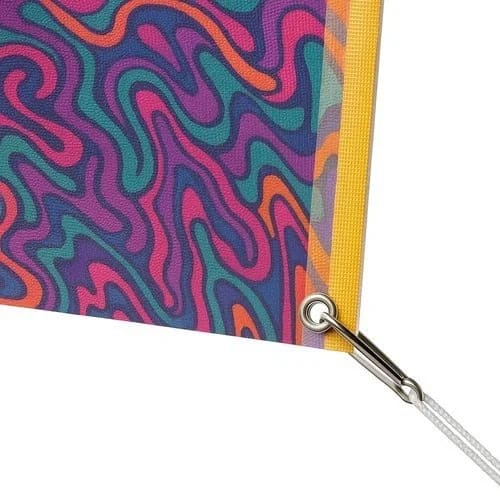
A banner can arrive at the right place with the right message and still look rushed if deep storage creases interrupt the artwork. Before a grand opening, event, or storefront promotion, give the material time to relax instead of trying to force it flat at the last minute.
The safest method depends on how the banner was printed and finished. Start with the provider’s care guidance, then use the least aggressive combination of warmth and even tension that works. The methods below are troubleshooting options, not universal temperature instructions.
LA Prime Signs provides custom banner production, not field setup or installation. The customer or qualified installer selects attachment points, verifies supporting conditions, plans access, and installs the finished banner.
Why do vinyl banners wrinkle?
Many banners use a flexible PVC face reinforced with a woven scrim, then add inks, hems, seams, grommets, or other finishing. Folding creates a sharp memory line; tight rolling, crushing, cold storage, and temperature cycling can add ripples or distort the edges.
Grafix Plastics discusses heat resistance as a material property of flexible PVC film. A finished printed banner is a layered product, however, so one material temperature should never be treated as a universal heat setting for the entire banner.
How do you smooth out a vinyl banner using sunlight?
Ambient warmth can help a lightly creased banner relax. Unroll it on a clean, smooth surface or hang it from its intended attachment points with balanced tension. Keep the print away from abrasive concrete, dirty pavement, standing water, and any surface hot enough to mark the vinyl.
Los Angeles-area conditions are not uniform. Cool or shaded conditions may provide little warming, while direct sun can heat a dark print quickly. Monitor the banner, keep people clear of cords and supports, and move it to indirect warmth if the surface begins to feel unusually soft or tacky.
Time required: Recheck frequently rather than using a fixed clock. Light ripples may improve as the banner hangs; a hard fold can remain permanent.
How do you remove wrinkles with a hair dryer or heat gun?
A hair dryer can provide controlled warmth when ambient conditions are not enough. A heat gun reaches much higher temperatures and is easier to misuse; unless the material maker gives a compatible procedure and the operator can control it, choose the gentler tool or ask the print provider to evaluate the banner. Working from the non-printed side can reduce direct contact with the graphic, but it does not eliminate heat risk.
- Support the banner cleanly with mild, even tension.
- Test the lowest dryer setting on an inconspicuous edge.
- Keep the airflow moving and well away from the surface; reduce heat immediately if the material changes sheen or shape.
- Let the warmed area relax under tension instead of rubbing or stretching the printed face.
- Allow the section to cool before deciding whether another gentle pass is warranted.
Caution: Stop at the first sign of odor, tackiness, discoloration, gloss change, ink transfer, curling, or distortion. More heat will not repair heat damage.
Before energizing a dryer or heat gun, clear paper, solvents, fabric, and other combustibles from the work area and check what is behind the banner. Keep the tool in hand and moving while it is on; never leave it energized unattended. Treat the nozzle and exhaust as burn hazards, place the tool only on its manufacturer-approved rest, and let it cool completely before storage. Do not use powered heat or steam around standing water, wet cords or outlets, or other energized equipment.
Can you use a steamer on vinyl banners?
A handheld steamer may relax some banners, but steam combines heat and moisture. That can be a poor match for certain inks, taped hems, seams, or attached hardware. Check care instructions and test an edge before treating the graphic area.
Keep the steamer head from touching the banner, keep hands and skin out of the steam path, avoid soaking the seams, and work in brief moving passes. Blot condensation with a clean lint-free cloth; do not scrub the warmed print. If the construction is unknown, a print provider should assess it first.
Should you use an iron on a vinyl banner?
Do not apply an iron directly. A soleplate concentrates heat and pressure in one spot, which can flatten texture, distort scrim, change gloss, transfer color, or melt the film. A towel does not make the temperature predictable. Use a gradual non-contact method approved for the product instead.
How should you store vinyl banners to prevent wrinkles?
Prevention is more reliable than heat repair. This Signs.com banner-care guide also emphasizes rolling rather than folding. A few practical storage habits help:
- Roll, do not fold. Use a clean core wide enough to support the full banner, and follow the printer’s direction for which face goes inward.
- Protect the roll. Keep it from being crushed, bent, or stored under heavy materials.
- Keep it dry and temperate. Avoid prolonged UV exposure, hot vehicles, damp storage, and sharp temperature swings.
- Label reusable graphics. Note the orientation and installation hardware so the next setup does not begin with unnecessary handling.
When is it time to replace a wrinkled banner?
If a fold line remains after gentle treatment, repeated heating is unlikely to improve it safely. Cracked ink, distorted hems, torn grommets, brittle edges, or a design that has already faded are stronger reasons to replace the banner than to keep reheating it.
Need a newly produced or replacement banner for a Los Angeles-area storefront or event? Request a production quote with customer-verified finished dimensions, quantity, artwork, viewing distance, expected reuse, exposure, and the finishing details specified by the customer or installer. Site measurements, attachment design, access, and installation are not included.
FAQ
Can I iron a vinyl banner to remove wrinkles?
Do not put an iron directly on a vinyl banner. Concentrated contact heat can distort the film, change the surface sheen, transfer ink, or damage hems. Use a gradual method approved for the banner construction instead.
How long does gentle warmth take to relax banner wrinkles?
There is no fixed time. Light storage ripples may relax during a careful setup, while hard fold lines may remain after extended hanging. Temperature, banner construction, crease age, and tension all affect the result.
What temperature is safe for a vinyl banner?
A universal safe temperature does not exist for every printed banner. PVC formulation, scrim, ink, coating, hems, and adhesives change the tolerance. Follow the producer’s guidance, begin with the lowest controllable warmth, and test an inconspicuous edge.
Should I fold or roll a reusable vinyl banner?
Roll it on a clean, wide core unless the producer gives different instructions. Avoid a tight roll, sharp bends, and crushing. Protect the printed face and keep the roll dry and away from prolonged heat.