
Glass Etching for Signs: Methods, Safety, and Alternatives
“Etched glass” can mean a permanently altered surface, a laser-frosted mark, or removable etched-look film. Choose by permanence, glass type, privacy, maintenance, tenant needs, and the hazards of the actual process.
Key takeaways
- True chemical etching is permanent and can involve fluoride-containing corrosives; consumer cream is not automatically safe or suitable for architectural glass.
- Abrasive etching can create deeper textures, but it requires documented glass, a controlled blast process, suitable non-silica media, dust collection, and trained operators.
- CO2 laser marking usually creates surface microfractures rather than a deep cut, and some tempered, coated, laminated, stressed, or unknown glass should not be processed.
- Frosted window film often delivers the privacy and etched appearance a tenant wants without permanently altering the pane.
- The customer and qualified glass or installation professionals verify the pane, safety-glazing role, final dimensions, code requirements, access, and installation method before production.
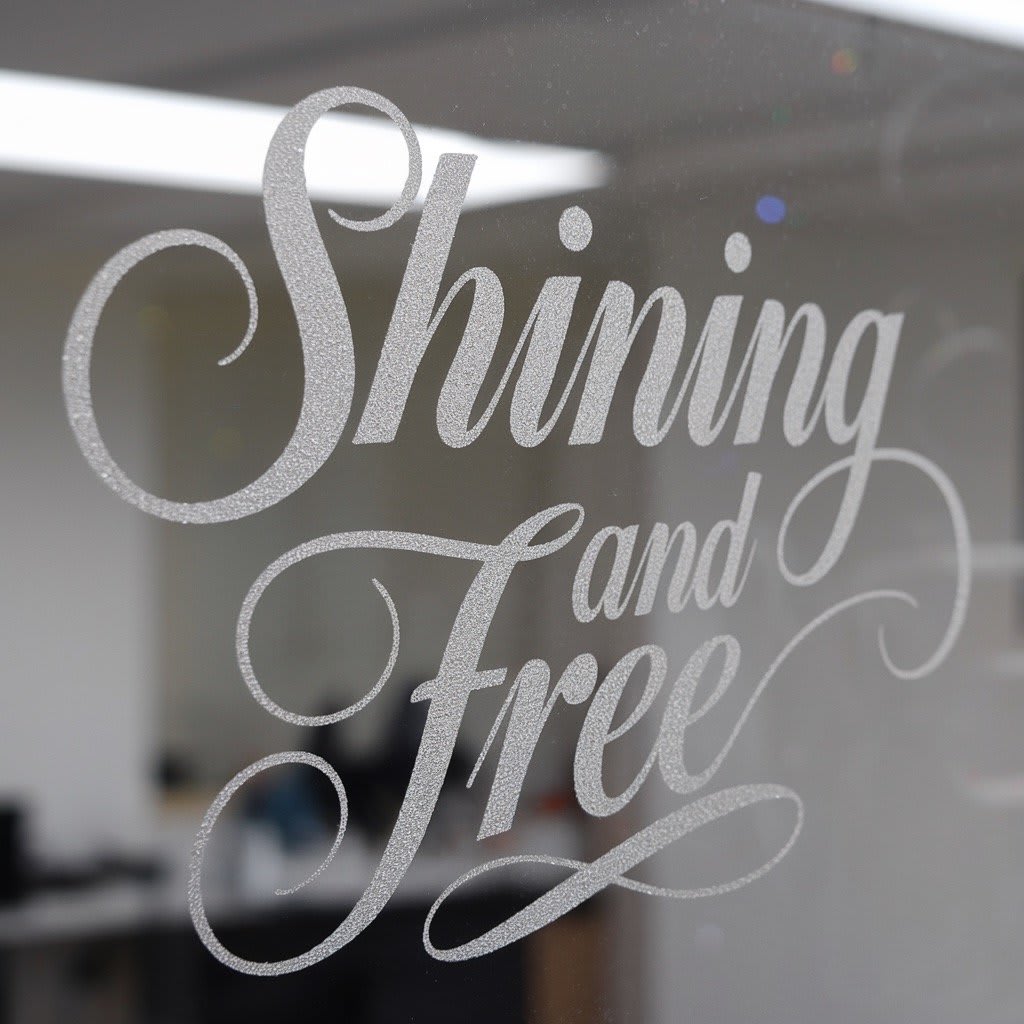
Frosted graphics can add privacy and restrained branding to lobby doors, conference rooms, clinics, hospitality spaces, and storefront glazing. But “etched glass” is not one product. It may describe permanent chemical or abrasive work, a laser-created surface mark, or a removable film that imitates the appearance.
For a Los Angeles-area project, the better choice depends on who owns the glass, whether the brand or privacy pattern may change, how the pane is constructed, the direction of strong daylight, cleaning access, exterior exposure, and what the glass is required to do as safety glazing. This article compares production methods; it does not promise that every method is available for a project.
LA Prime Signs does not inspect installed glass, take field measurements, etch at the job site, determine glazing compliance, plan access, or install. The customer and qualified glass or installation professionals supply verified pane information, final dimensions, approvals, and installer-ready specifications.
What is glass etching and how does it work?
True glass etching changes the surface to create a matte or frosted contrast. This overview of different glass-etching methods describes chemical, abrasive, and laser approaches. They do not remove material in the same way or create interchangeable depth, edge, or structural effects.
An applied etched-look film does not etch the glass at all. That difference is valuable: the graphic can provide branding, distraction markings, or privacy while preserving a path to removal or replacement.
Which glass etching technique should you choose?
The right method depends on your project scope, desired finish, available equipment, and budget. Here is how each approach compares:
Chemical etching: permanent surface change with chemical hazards
Chemical etching uses reactive chemistry to alter the surface. Commercial creams may feel less dramatic than bulk acid, but some contain fluoride compounds capable of serious injury. Product labeling, concentration, exposure controls, spill response, rinsing, waste handling, and local requirements all matter.
Controls to confirm:
- Exact product label and current safety data sheet
- Chemical-compatible mask or resist and applicators
- Manufacturer-specified eye, face, skin, and respiratory protection
- Controlled ventilation, spill response, decontamination, and waste plan
- Verification that the glass and its coating or treatment are compatible
Advantages: Can produce an even permanent matte field on suitable glass with a properly controlled process.
Limitations: Irreversible; chemical exposure and disposal hazards; possible stencil bleed or inconsistent finish; often a poor fit for installed architectural panes or occupied sites.
Abrasive etching: controlled depth and texture
Abrasive etching propels approved media against exposed glass through a resist. It can create deeper textures and staged relief, but it also creates dust, rebound, noise, pressure, and breakage hazards. Despite the familiar word “sandblasting,” free-silica sand is not an acceptable generic recommendation because respirable crystalline silica can cause severe disease.
Controls to confirm:
- An enclosed or otherwise engineered blast system sized for the panel
- Approved non-silica abrasive selected for the target finish
- Effective dust collection and a maintained ventilation system
- A resist rated for the media, depth, and detail
- Training and personal protective equipment based on the process and exposure assessment
- Glass identification, handling support, and breakage containment
Advantages: Adjustable texture and depth, crisp resist-defined edges, and the possibility of dimensional carving on suitable stock.
Limitations: Specialized equipment and training; risk of overcutting, chipping, dust exposure, and glass breakage; large or safety-critical panels require supplier and project review.
Laser etching: digital detail with material-specific limits
A CO2 laser usually creates a frosted field through controlled surface microfracturing. It can reproduce digital detail without physical blast media, but results vary by glass composition, thickness, coatings, stress, focus, and fixture.
Controls to confirm:
- An enclosed laser system with intact interlocks and suitable extraction
- Positive identification of the glass, including temper, lamination, coating, and stress history
- A secure, level fixture and a representative test piece
- Documented machine settings and continuous fire and breakage monitoring
Advantages: Digital repeatability, fine artwork potential, and no abrasive resist removal. This manufacturer comparison of abrasive and laser methods is a useful process overview, but production time and quality still depend on the exact art, glass, machine, and setup.
Limitations: Generally a surface-level effect; possible chipping, microfractures, inconsistent tone, and breakage; not a default process for tempered, laminated, coated, installed, or unknown glass.
What must be verified before glass-graphics production?
Proper documentation directly affects the result. This planning information is not a universal procedure for altering installed or safety-critical glass.
Selecting the right glass
Start by identifying the pane, not by choosing a setting. Record manufacturer, composition, thickness, edge treatment, coating, lamination, heat treatment, installation location, and whether it serves as required safety glazing. Inspect chips, scratches, drilled holes, notches, and existing stress.
Pause for review: Tempered, heat-strengthened, laminated, coated, insulated, installed, damaged, unknown, or structurally significant glass should not be altered without the glass supplier and relevant project professional confirming the method. A removable film may be the safer and more flexible answer.
Designing your pattern
Design at full scale and review minimum line widths, reversed weed areas, resist durability, door hardware, seals, sightlines, privacy height, contrast, and required visual markings on transparent doors or partitions. Fine art that works on a screen may collapse in a resist or look weak against daylight.
If the aim is privacy or branding rather than permanent surface removal, compare the design with frosted window film. A removable sample can answer opacity and sightline questions before the glass is changed.
Safety precautions
Every permanent method has a different hazard profile. Chemical products can cause severe burns and systemic injury. Abrasive processes create dust, high-pressure, noise, and breakage hazards. Lasers add optical, high-voltage, fume, fire, and thermal-stress hazards.
“Wear gloves and work in ventilation” is not a complete safety plan. Use the product and equipment instructions, safety data, engineered controls, training, emergency procedures, and task-specific personal protective equipment. Keep hazardous production out of occupied customer areas.
What does a responsible glass-graphics workflow look like?
Because the processes carry different hazards, there is no universal DIY recipe. A responsible commercial planning sequence is:
- Identify the glass and approvals. Confirm construction, ownership, landlord criteria, safety-glazing role, warranty, and whether alteration is allowed.
- Define the job. Separate branding, privacy, decoration, bird-safety or distraction markings, and code-related visibility needs.
- Compare methods. Evaluate chemical, abrasive, laser, and film options for permanence, finish, risk, cost variables, serviceability, and future change.
- Prepare the artwork. Build at full scale around hardware, edges, seals, viewing angles, resist limits, and installer-supplied tolerances.
- Produce a representative sample. Use matching glass or film and review tone, depth, edge quality, opacity, reflected light, and cleaning behavior.
- Run the approved process. Trained operators follow the exact chemical or equipment documentation, exposure controls, quality checks, and waste plan.
- Inspect before installer handoff. Reject chips, cracks, unacceptable microfracture, weak film edges, stencil bleed, or a result that conflicts with the approved sample.
What advanced glass etching techniques exist?
Specialist production teams can use several advanced methods when the glass, controls, and design have been reviewed for the process:
Multi-stage abrasive etching uses registered resist layers and controlled depth changes for dimensional work. It increases breakage risk and demands a specialist process on suitable glass.
Combining frost and color may use compatible glass coatings, second-surface print, layered films, or mounted acrylic sign elements. Compatibility, UV exposure, cleaning, and repair should be tested as a system.
Deep carving removes more glass and can create sculptural relief, but it is not an automatic choice for architectural glazing. Glass thickness, stress, edges, support, and engineering review set the limits.
How do you maintain etched glass signs?
Care requirements vary across chemically etched, abrasive-etched, laser-marked, coated, and film-based glass systems:
- Follow the approved care sheet: True etching, laser-frosted surfaces, coatings, and applied film can require different cleaners and tools.
- Use nonabrasive methods unless specified: Test cleaners away from the artwork and keep blades, scrubbing pads, and harsh chemistry off the treatment unless the fabricator approves them.
- Do not add a generic sealant: A sealer can change sheen, trap contamination, yellow, or interfere with film and coatings. Use one only as part of an approved system.
- Plan for exposure: Exterior and marine-influenced Southern California sites may need a cleaning plan for salt, moisture, and traffic film that follows the glass or film supplier’s procedure.
- Inspect edges and damage: Chips, cracks, lifting film, seal failure, or impact damage deserve review before routine cleaning continues.
What can you create with etched glass?
Etched, laser-frosted, or film-based glass graphics can serve different applications:
- Office and clinic entries: Logos, suite identification, and partial privacy without blocking all daylight
- Conference rooms: Sightline screening, patterns, and required visual contrast coordinated with doors and hardware
- Hospitality and retail interiors: Restrained branding on partitions, display cases, and selected storefront zones
- Directories and recognition displays: Permanent glass or updateable layered systems, depending on how often names change
- Decorative panels: Artwork or patterns designed around the glass construction and support method
For a commercial project, decide first whether true etching is necessary. A well-designed frosted window graphic or layered sign may create the intended look with less permanent risk and easier brand updates. The installation-ready production and handoff guide explains which verified inputs the production shop needs and which field decisions remain with the customer and installer.
Troubleshooting common glass etching problems
Uneven chemical or abrasive finish: Stop rather than repeatedly processing the same pane. Review glass preparation, resist, chemistry or media, equipment uniformity, process time, and the approved sample.
Stencil bleeding or edge loss: Check resist compatibility, adhesion, minimum feature size, glass contamination, and process depth. Reworking permanent glass can enlarge the defect.
Laser haze, chips, or banding: Review material approval, focus, raster settings, fixture, optics, stress, and test data. Do not assume another pass will improve a stressed pane.
Cracks or edge damage: Stop handling and isolate the area. Damage may relate to pre-existing flaws, support, impact, pressure, heat, or process stress; a qualified glass professional should determine the next step.
Film silvering, bubbles, or lifted edges: Check cleaning chemistry, glass coating, edge clearance, water removal, cure conditions, and film compatibility before replacing the graphic.
Ready to scope glass-graphics production?
A strong glass-sign solution begins with the right level of permanence. True etching may suit a confirmed, long-term architectural feature. Laser marking can fit some repeatable detail work. Frosted film is often more sensible when privacy, tenant changes, or future rebranding matter.
For a Los Angeles-area office, clinic, hospitality space, or storefront, request a production quote with customer-verified pane type and final dimensions, glass markings, approved artwork, quantity, privacy goals, and installer-supplied edge and placement requirements. The available production method must be confirmed in writing. Glazing assessment, site verification, code decisions, access, and installation are not included.
FAQ
Is chemical etching cream a safe beginner method?
It should not be described that way. Etching products can contain corrosive fluoride compounds and can injure skin or eyes. Use only a product and process you are trained and equipped to handle, follow its label and safety data sheet, and keep hazardous production away from occupied public spaces.
What is the difference between true etched glass and frosted film?
True etching permanently changes the glass surface. Frosted film is applied to the pane and can often be removed or replaced. The visual effect may be similar, but permanence, privacy, cleaning, landlord approval, and future rebranding are different.
Is laser-etched glass structurally unchanged?
No assumption of that kind is safe. A CO2 laser often creates surface microfractures, and heat or existing stress can contribute to chipping or breakage. Verify the exact glass and obtain supplier and equipment guidance before testing.
Can tempered or safety glass be etched?
Do not process it based on a generic article. First identify whether the pane is tempered, heat-strengthened, laminated, coated, or part of a required safety-glazing assembly. Surface alteration can affect performance, appearance, warranty, or compliance, so coordinate with the glass supplier and project professional.
When is frosted film the better sign solution?
Film is often practical for leased offices, conference-room privacy, changing brands, phased buildouts, or glass that should not be permanently altered. The film still needs to be selected for the exact glass, exposure, edge condition, and cleaning routine.
Can an etched or frosted design include color?
Yes, but the method matters. Applied film, second-surface print, compatible glass coatings, or layered sign components can add color. Test adhesion, appearance, cleanability, UV exposure, and compatibility before specifying the system.