
Gold Leaf Signage: A Practical Guide to Gilded Details
Genuine gold leaf can add a distinctive reflective detail to a sign, but the result depends on purity, substrate preparation, application conditions, exposure, and a realistic maintenance plan.
Key takeaways
- Specify whether the finish is genuine gold leaf, another metal leaf, metallic paint, or film; those materials do not age or reflect light the same way.
- Karat, leaf manufacturer, substrate, primer, size, application window, edge detail, and exposure all affect exterior performance.
- Coastal salt and moisture can stress adjacent metals, coatings, and hardware, while inland heat can change surface temperature and application timing.
- A decades-long service life may be possible for a well-designed high-karat system, but it is not a universal warranty or maintenance interval.
- Use a physical sample and site-specific maintenance plan before treating gold leaf as the right finish for a sign.
- The customer and qualified installer remain responsible for field dimensions, site verification, mounting, access, code, permits, and installation.
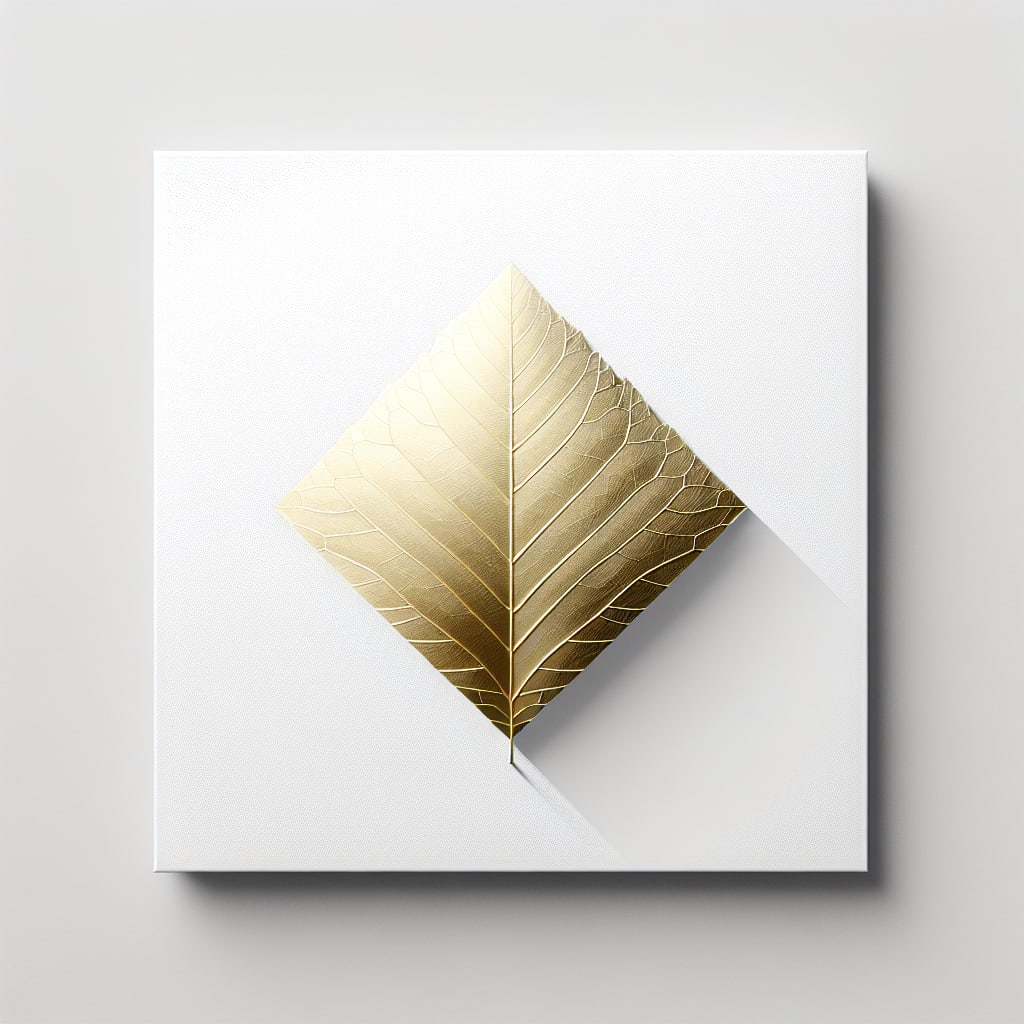
Gold leaf is actual metal beaten into extremely thin sheets and transferred to a prepared surface with an adhesive known as size. That material difference gives genuine leaf a reflectance that metallic paint and printed foil imitate but do not duplicate. It can be an effective accent for a storefront name, plaque, window, monument detail, or interior focal point when the brand and viewing conditions support it.
It is also a specialist finish rather than a shortcut to “luxury.” A useful production specification begins with the substrate, exposure, desired read, and maintenance access—not with a promise that every gold-colored surface will last for decades. Field conditions and installation still require review by the customer and qualified professionals.
What is gold leaf and why does it matter for signage?
Genuine gold leaf is sold by karat, color, weight, and format. Loose leaf is handled directly, while transfer or patent leaf is carried on paper for more controlled placement. Imitation gold leaf uses other metals, and metallic paint or film uses a different construction again. The proposal and proof should identify which finish is actually being supplied.
On a sign, leaf is usually most successful as a controlled visual layer over a stable, properly prepared base. It can complement fabricated aluminum, carved or painted panels, glass lettering, and architectural details, but each assembly requires its own compatible preparation.
How long can gold leaf last on an exterior sign?
Gilded Planet’s exterior-gilding guidance describes long service from correctly applied high-karat leaf. That is useful evidence for material selection, not a blanket 30-year warranty. The sign beneath the leaf can move, corrode, crack, admit water, or lose adhesion even when the gold itself remains chemically stable.
Ask what conditions any lifespan statement assumes: leaf grade and weight, substrate, primer, size, orientation, climate, touch or abrasion, cleaning, and repair history. A small interior lobby detail and an exposed exterior fascia should not receive the same expectation.
Why does karat level matter for outdoor durability?
Karat describes the proportion of gold in the alloy. Pure gold is resistant to tarnish, while silver, copper, and other alloying metals can react with the environment. Higher-karat leaf is therefore commonly chosen for exterior work, although its exact color and handling characteristics still vary by product.
Confirm that the selected leaf and every preparation product are intended for the location rather than relying on “gold” as a sufficient material description. The approved system should name the leaf, primer, size, optional clear coat, substrate, exposure, and repair method.
What goes into gold leaf application?
A project-specific gilding plan generally includes:
- Substrate assessment: Identify movement, porosity, corrosion, coatings, contaminants, repairs, sharp edges, and water paths.
- Compatible preparation: Clean and prime through a system approved for that substrate and the selected size.
- Controlled sizing: Apply the specified adhesive and judge its working window under the actual temperature and humidity.
- Leaf placement and cleanup: Transfer the leaf without gaps, contamination, or damage to adjoining finishes, then allow the system to cure as directed.
- Protection decision: Add a clear system only when the approved specification calls for one; a mismatched coating can cloud, peel, or shorten the repair cycle.
Those steps describe the planning sequence, not a universal do-it-yourself recipe. Read the current product label, technical data sheet, and safety data sheet for every primer, size, cleaner, coating, and solvent. Control ignition sources; provide the specified ventilation; prevent skin and eye contact with suitable PPE; and use respiratory protection only within a compliant selection, fit-testing, medical-evaluation, and cartridge-change program. Store, collect, and dispose of solvent-soaked materials and chemical waste as directed instead of leaving them in the work area.
How does Southern California exposure affect gold leaf signs?
Los Angeles and the wider Southern California region contain distinct exposure conditions:
- Coastal sites: salt deposits and persistent moisture can affect the substrate, cut edges, fasteners, surrounding coatings, and lower-karat alloys even when high-purity gold remains stable.
- Inland and sun-facing sites: high surface temperatures can narrow the sizing window during application and increase movement in the underlying assembly.
- Reflected light: gold can flash brightly, so orientation, background contrast, letter form, and viewing angle should be tested for readability rather than assumed.
- Irrigation and cleaning: repeated wetting, mineral deposits, abrasive wiping, or harsh chemicals can damage adjacent finishes and edges.
The customer and qualified installer are responsible for final field dimensions, site verification, mounting design, structural suitability, access, permits, code compliance, and installation. For a separately installed sign, the installation-ready production and handoff guide explains how customer-supplied specifications can be organized before production. LA Prime Signs does not survey, gild at the site, or install.
What are the benefits and tradeoffs versus paint or foil?
- Reflectance: genuine leaf produces a bright, changing metallic surface that can be distinctive at the right angle.
- Material identity: the finish can support a traditional, ceremonial, hospitality, or carefully detailed brand direction.
- Craft variation: overlaps and subtle texture are part of the process; exact machine-like uniformity may call for another finish.
- Cost and repair: skilled labor, surface preparation, access, and future patching can make leaf a poor fit for frequently changed graphics.
- Readability: reflectance can attract attention, but glare and weak contrast can still make lettering hard to read.
Is gold leaf an environmentally preferable finish?
Gold leaf itself adds very little material by mass, and a long-lived finish may avoid frequent replacement. That does not establish a complete environmental benefit. Mining and refining, backing materials, primers, solvent-based or water-based size, clear coats, transport, substrate replacement, and recovery all contribute to the life cycle.
Ask for specific product documentation and a repairable design instead of describing a finish as “green” merely because gold can be recycled.
What applications work best for gold leaf?
Potential applications include:
- storefront names and transom lettering viewed from pedestrian distance
- select plaque, monument, and address details
- interior reception lettering and decorative focal points
- carved, routed, or painted sign accents
- borders or emblems on compatible metal, wood, glass, or acrylic sign assemblies
Short-term promotions, frequently handled pieces, exact fleet-wide replication, or low-contrast sun-facing layouts may be better served by metallic paint, film, printed effects, or another durable finish.
How should a gold leaf sign provider be evaluated?
Ask for a written system specification, relevant samples, and examples with known age and exposure. Confirm who is responsible for substrate repairs, gilding, fabrication, access, installation, protection of adjacent surfaces, and future maintenance. A mockup should show the proposed gold next to the real background in representative light.
For current shop-produced painted-sign options, review hand-painted sign production. If approved artwork calls for a gold-leaf detail, send the artwork, finished dimensions, substrate, exposure, and desired finish for a production review. Specialty gilding is not promised by this guide, and field measurement, mounting, access, permits, and installation remain outside LA Prime Signs’s scope.
Further reading
FAQ
How long can exterior gold leaf last?
High-karat gold leaf can remain serviceable for many years, and specialist guidance documents much longer examples, but no fixed lifespan applies to every sign. Purity, substrate stability, preparation, size, orientation, handling, pollution, adjacent materials, and maintenance all affect the result.
Why is high-karat leaf commonly specified outdoors?
Higher-karat leaf contains less silver, copper, or other alloy metal that can tarnish. The exact grade still needs to be approved for exterior use by the leaf and system supplier.
Can gold leaf be applied to any sign material?
Not automatically. Wood, metal, glass, masonry, and some plastics may accept gilding through different preparation systems, but adhesion, movement, porosity, primer compatibility, and edge conditions must be evaluated for the actual substrate.
Should exterior gold leaf always receive a clear coat?
No universal rule applies. Some high-karat exterior systems are intentionally left uncoated, while lower-karat leaf or touched surfaces may require an approved protective system. Follow the leaf, size, coating, and substrate guidance as one compatible specification.
How do Southern California conditions affect gilded signs?
A coastal site may expose adjacent coatings, fasteners, and substrates to salt and moisture. An inland, sun-facing surface may run much hotter during application and service. Orientation, shade, irrigation, handling, and cleaning matter more than one countywide rule.
Does LA Prime Signs provide on-site gilding or installation?
No. LA Prime Signs is a production-only shop and does not perform site surveys, on-site gilding, installation, permitting, or maintenance. A requested gold-leaf detail must be reviewed as a shop-production specification; this educational guide does not promise that specialty capability.