
CNC Machining for Custom Signs: A Practical Fabrication Guide
Computer-controlled cutting can make sign parts repeatable, but the result still depends on machine capacity, tooling, material behavior, workholding, finishing, tolerances, and a customer-approved production specification.
Key takeaways
- CNC describes computer-controlled motion, not a universal tolerance, material list, edge quality, speed, or sign-shop capability.
- CAD geometry must become a material-specific CAM plan that accounts for tooling, workholding, machine travel, part support, chip control, and a safe cutting strategy.
- Wood, HDU, acrylic, PVC, ACM, and metals behave differently; the exact product data and the fabricator’s qualified process control the options.
- Dimensional letters, routed panels, templates, pockets, patterns, and repeat parts can benefit from CNC; field measurements, mounting design, structural suitability, and installation remain separate customer and installer responsibilities.
- Ask for the finished-part tolerance, sample, edge condition, coating system, attachment plan, inspection method, and responsible fabricator—not a machine accuracy slogan.
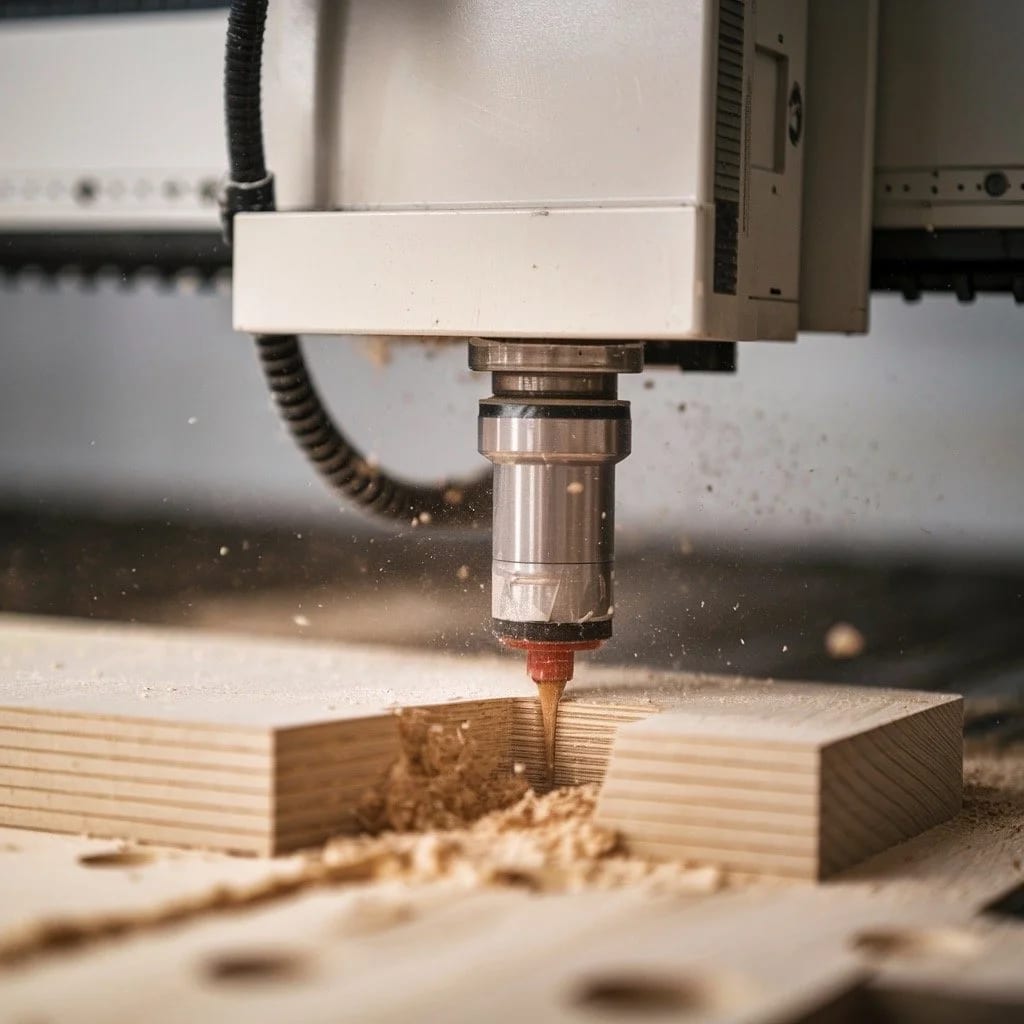
CNC equipment can cut profiles, pockets, holes, lettering, patterns, and reliefs from a digital toolpath. That repeatability is useful for production-ready dimensional sign components, routed panels, approved patterns, and assemblies whose parts need to align. It does not make every cut exact, every material safe, or every finish complete.
For a Los Angeles or Southern California sign project, the useful question is not simply “Will this be CNC cut?” Ask which machine and process suit the actual stock, what finished-part tolerance matters, how the edges will be treated, and which final dimensions and assembly interfaces the customer has approved. LA Prime Signs supplies sign products and components for customer or third-party installation; it does not field-measure, engineer, permit, or install them.
What is CNC machining and why does it matter for signs?
CNC is a control method used on routers, mills, lathes, cutters, drills, and other equipment. In a common sheet-sign workflow, CAD defines the geometry and CAM software converts selected geometry into toolpaths, tool calls, feeds, speeds, step-downs, entry moves, and work coordinates. The operator then verifies the stock, workholding, clearance, tooling, program, dust or chip collection, and safe machine state before cutting.
This overview is planning information, not machine-operating instruction. Only trained and authorized operators should run the equipment, following the machine manual and the exact material label and safety data sheet. Keep guards and interlocks active; use engineered dust or chip extraction and task-specific eye, hearing, skin, and respiratory protection; control combustible dust, chips, heat, and ignition through the shop’s qualified program; and isolate hazardous energy before setup, tooling, maintenance, or clearing a jam. Do not copy feeds, speeds, or toolpaths from a generic article.
Published positioning accuracy is not the same as accuracy on a finished sign. Laguna Tools' sign-making router overview is an example of machine-specific capacity information; any vendor specification must be tied to the named model, setup, test method, and workpiece. Tool deflection, runout, stock movement, thermal change, finishing, and measurement can create a much larger tolerance stack.
When the process is controlled, CNC can support:
- repeatable profiles and spacing across dimensional letters or panel sets;
- controlled pocket depth, drilling patterns, and alignment features;
- digital records for approved replacements or later phases, subject to file control and material availability; and
- geometry that would be slow, inconsistent, or impractical to execute manually.
Which materials work for CNC-fabricated signage?
“CNC compatible” is not a material specification. Product grade, thickness, facing, core, protective film, flatness, temperature, tool, extraction, finishing, and end use all matter.
Wood and high-density urethane (HDU)
Wood can support carved lettering, relief, borders, and shaped panels, but species, grain direction, knots, moisture, internal stress, splintering, edge sealing, and exterior finish affect the result. HDU products can machine with consistent grain-free behavior, yet density, temperature limit, fastener design, span, paint system, and manufacturer approvals still vary. Dust control, respiratory protection, ignition prevention, and machine guarding belong to the qualified shop procedure.
Acrylic and other plastics
Acrylic can be profiled, pocketed, drilled, and engraved for letters, plaques, panels, and lighting components. It is sensitive to heat, chip evacuation, stress, sharp inside corners, clamping, coolant or cleaner compatibility, and edge-finishing technique. MakerVerse's acrylic-machining guide provides useful material context, but a sign shop still needs the actual sheet maker's data and a validated process. Flame polishing, solvent contact, and thermal forming can change stress and introduce ignition, vapor, burn, and chemical hazards. They require the selected acrylic maker’s approved process plus qualified ventilation or exposure controls, compatible PPE, ignition control, and waste handling; they are not generic finishing steps.
Aluminum and other metals
Some CNC routers can process selected aluminum sheet or plate; mills and other metalworking equipment handle different stock and tolerances. Alloy, temper, thickness, cutter, spindle, lubrication, chip evacuation, fixturing, heat, burr control, and fire risk determine the process. A machine that cuts HDU is not automatically equipped or qualified to cut metal. For aluminum signage, machining is only one stage before deburring, pretreatment, coating, graphics, hardware, and corrosion detailing.
Aluminum composite and PVC sheet
Aluminum composite material combines thin skins with a core, while PVC foam sheets are cellular plastics. Both are sold in multiple grades with different exterior, fire, temperature, fastening, and fabrication limits. Routing can expose a core or create a fold detail; those edges, minimum radii, cut depths, dust or chip controls, and approved applications come from the selected product and the complete sign design.
Which sign types benefit most from CNC fabrication?
Dimensional lettering and logos
CNC cutting can keep repeat letter profiles, backs, holes, and alignment features consistent. Edge finish, stroke thickness, material depth, paint, returns, studs, spacers, pattern accuracy, wall condition, and viewing distance still decide whether the installed logo looks resolved. A physical material and finish sample is more useful than “CNC precision” by itself.
Routed and carved panels
Pockets, V-carved lines, relief, prismatic forms, and profile edges can give a panel depth. Tool geometry sets the smallest inside radius and affects how a drawing translates to the material. Very fine details may disappear after primer and topcoat, while deep cuts can weaken stock or expose a vulnerable core. Review a representative cut and finished sample.
Engraved signs and plaques
Engraving can produce labels, legends, line art, serial information, and recesses for infill. Readability depends on character size, stroke, depth, surface color, infill, glare, viewing distance, and wear—not simply the machine resolution. Memorial, safety, code, and regulated plaques may carry content, material, permanence, and approval requirements outside the machining process.
Backlit and LED-integrated signage
CNC parts can form light apertures, diffuser pockets, backs, faces, wire clearances, and module templates. Optical spacing, heat, drainage, wiring protection, service access, listed or accepted construction, structural attachment, electrical work, and inspection remain separate design responsibilities. Do not route or modify an electric sign from a generic article.
Accessible wayfinding signs
CNC can help repeat panel profiles, recesses, mounting features, and some tactile components. It does not verify raised-character shape or height, Braille, spacing, contrast, glare, mounting location, reach, or which rooms require a sign. Use the current accessibility rules and an approved production method for the project; inspection must address the complete installed sign.
How does the CNC sign-making process work?
Approved design inputs
The customer supplies verified final dimensions and approved artwork and identifies material thickness, appearance, interfaces, clearances, tolerances, finish allowances, and any installer-approved mounting features. Qualified project professionals remain responsible for loads, structural suitability, accessibility, electrical design, code, permits, and field installation. Clean vector artwork may start the CAD file, but fabrication geometry also needs tabs, radii, offsets, kerf or tool compensation, joints, specified hardware, and datum points. Keep revisions controlled so the machine does not cut an obsolete proof; the artwork setup guide explains the production-file handoff.
Material selection and workholding
Stock should be identified by product and grade, inspected, acclimated where appropriate, and supported without bowing or contaminating a finish. Vacuum, clamps, screws, fixtures, tabs, adhesives, or spoilboards each carry limits. The hold-down method must resist cutting forces without putting hardware in a toolpath or damaging a usable face.
Machining operations
A CAM plan may combine:
- profile cutting for an outside or inside shape, with tool-radius limits at corners;
- pocketing for recesses, channels, and material relief;
- V-carving or engraving for tapered strokes and surface detail;
- drilling or boring for controlled holes and attachment patterns; and
- surfacing or 3D toolpaths when the equipment, stock, finish allowance, and geometry support them.
Finishing, assembly and inspection
Cut parts may need deburring, sanding, cleaning, stress relief, primer, paint, powder coating, print, laminate, polish, edge sealing, threaded inserts, bonding, or mechanical assembly. Those steps can alter dimensions and appearance. Inspect critical features after finishing, dry-fit assemblies, label parts, preserve approved files, and document the installation-ready production and handoff specification before packaging.
What are the advantages over manual methods?
Repeatability with a defined tolerance
A controlled digital process can reproduce geometry more consistently than freehand layout, especially across part sets. “Identical” and “perfect match years later” are too strong: tools wear, materials and coatings change, files are revised, machines differ, and an existing sign weathers. Define acceptable variation and retain approved records and samples.
Design flexibility within process limits
Nested profiles, repeated patterns, pockets, and complex curves can become practical. Every design still faces tool diameter, axis travel, collision, reach, undercut, stock size, grain, minimum feature, finishing, and handling limits. A multi-axis capability should be claimed only for the actual equipment and qualified vendor.
Predictable production after setup
Once a toolpath is proven, repeat parts may require less layout time. Programming, fixturing, test cuts, tool changes, inspection, hand finishing, coating, rework, and machine queue remain part of the schedule. CNC does not justify a same-day, days-not-weeks, or large-order timing promise without a current shop plan.
Material use that can be planned
Nesting may reduce offcuts, but grain direction, face quality, clamping margins, cutter width, part spacing, defective stock, remakes, and reusable remnants affect actual yield. Compare the complete fabrication cost and waste stream rather than assuming automation always makes custom work cheaper or more sustainable.
How should a CNC fabrication partner be evaluated?
Ask the responsible fabricator to document:
- capacity: usable bed and axis travel, stock thickness, tooling, material experience, extraction, lifting, and finishing limits;
- quality: finished-part tolerances, measurement method, calibration and maintenance, first-article approval, samples, and inspection records;
- workflow: accepted file types, revision control, CAM responsibility, prototype needs, replacement-file retention, and change approval;
- complete production scope: material sourcing, machining, edge work, coating, printing, assembly, labeling, packaging, and the exact items delivered to the customer or installer; and
- field responsibility: who verifies dimensions, loads, attachments, landlord criteria, accessibility, electrical and permit requirements, exposure, access, installation, and future service.
Do not infer that LA Prime Signs owns a particular router, mill, finishing line, or tolerance capability. The production method, material, finish, and achievable tolerance are confirmed during production review. Engineering, permitting, electrical work, site verification, access, and installation remain outside the shop's scope.
How should a CNC-fabricated sign project begin?
Provide approved artwork, quantities, customer-verified final dimensions, desired depth and edge, target material and finish, indoor or outdoor exposure, viewing distance, color references, installer-approved interface details, critical tolerances, replacement expectations, and target date. Note whether parts must align with installer-verified holes, existing hardware, another vendor's work, or a phased rollout.
Request a production quote for the dimensional sign components. LA Prime Signs will review the approved files, materials, finish, quantity, and required tolerances and select a supported production method. Final field dimensions, mounting design, structural and electrical decisions, code compliance, permits, access, and installation remain with the customer and qualified professionals.
FAQ
What does CNC mean in sign fabrication?
Computer Numerical Control means software directs machine motion along programmed paths. A sign workflow normally moves from CAD geometry to CAM toolpaths, setup, cutting, inspection, finishing, and assembly. The machine type and process still determine what materials, sizes, details, and tolerances are realistic.
How accurate is a CNC-routed sign part?
There is no universal ±0.001-inch or similar promise. Machine condition, calibration, spindle runout, tooling, material movement, hold-down, feed, temperature, part size, edge finishing, and measurement method all contribute. Specify a finished-part tolerance that the fabricator can inspect.
Which sign materials can be CNC cut?
Common candidates include wood, high-density urethane, acrylic, selected plastics, PVC foam sheet, aluminum composite material, and—on suitable equipment—some metals. The exact grade, thickness, manufacturer instructions, tooling, dust or chip hazards, and machine capability must be checked.
Does CNC fabrication make a sign ADA compliant?
No. CNC may help create repeatable parts, but accessible signs must satisfy the current requirements that apply to their use, including content, location, finish, contrast, character and Braille construction, spacing, mounting, and inspection. A routed component alone does not establish compliance.
How durable is a CNC-fabricated sign outdoors?
CNC does not set service life. Substrate grade, thickness, edge treatment, finish, graphics, hardware, drainage, orientation, UV, coastal salt, inland heat, irrigation, impact, cleaning, and maintenance determine how the complete sign performs.