
Production Only
Printing, cutting, fabrication, painting, finishing, assembly, labeling, and packaging begin with an approved production specification.
San Fernando service-area production guide—not a branch, corridor-plan interpreter, permit filer, or installation service.
San Fernando sign production should reflect the City's sign application, applicable corridor plan, approved sign type, and property-specific criteria.
Production and fabrication only. The customer or qualified project team confirms field dimensions, site conditions, approvals, mounting, access, and installation.
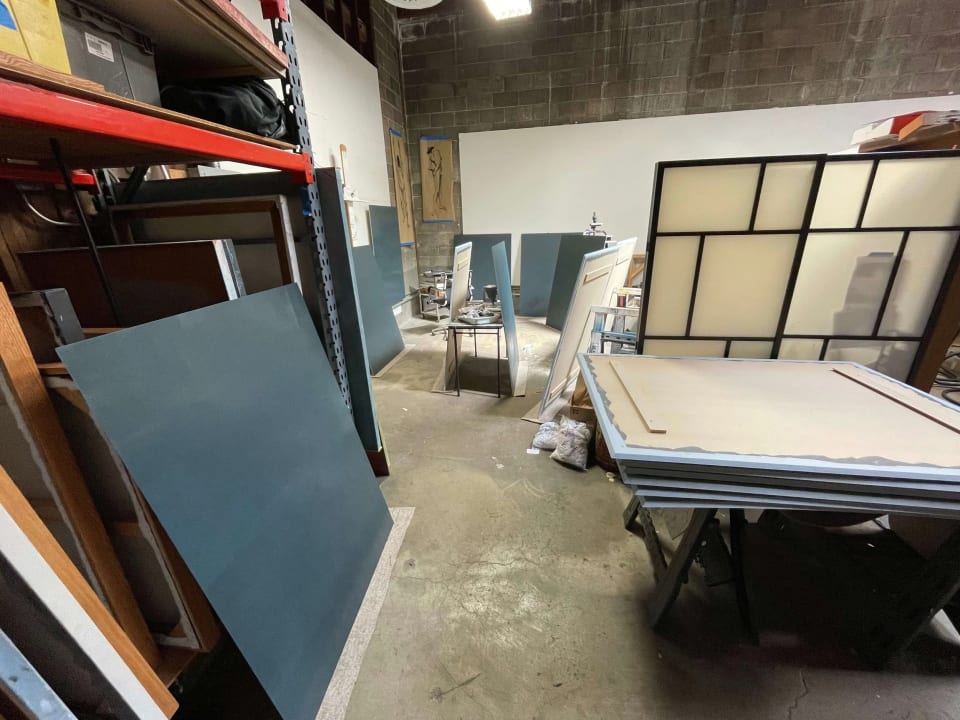
Printing, cutting, fabrication, painting, finishing, assembly, labeling, and packaging begin with an approved production specification.
The customer or qualified project team verifies the parcel, governing authority, property rules, permits, and any professional review before release.
Finished components can be labeled and packaged to the approved schedule; field measurements, mounting, access, and installation remain outside shop scope.
Panels produced from approved artwork and dimensions.
Banners finished to the confirmed display specification.
Graphics and panels prepared from final files.
LA Prime Signs does not perform site surveys, field measurements, permit handling, code review, engineering, electrical work, mounting design, installation labor, or installer scheduling.
The customer or qualified project team must resolve those items and provide the final approved inputs used for production. Start with the artwork setup guide and installer-ready handoff requirements.
Address to approved specification
Start a San Fernando request by identifying the parcel, applicable zone or corridor area, approved sign category, and any tenant-sign program. Do not apply one corridor's criteria to another address or assume a general rule overrides an adopted specific plan.
Then provide a dimensioned elevation, final copy, materials, colors, finish, construction depth, illumination status, quantities, and installer-defined interfaces. Temporary banners and graphics should have their own schedule and approved duration information.
Confirm the parcel's applicable corridor or planning area and the approved sign category, then provide the property criteria, sign count, dimensioned elevation, final copy, materials, colors, finish, illumination status, and installer-defined attachment interface. Identify any approved exception explicitly.
Record the applicable zone and approved permanent-sign type without borrowing another corridor's assumptions. Supply final dimensions, projection or support relationship, construction depth, material, finish, viewing direction, and qualified attachment information for the actual site condition.
Keep temporary work on a separate schedule. Specify approved finished dimensions, quantity, display orientation, duration information confirmed by the project team, material, opacity, hems, pockets, grommets or other requested finishing, and package labels. Field supports and installation are not part of shop production.
Drawing and handoff coordination
Carry the correct corridor or property reference on the approval set and production schedule so reviewers, designers, and the shop are working from the same criteria. Identify any approved exception explicitly.
For panels, banners, or graphics, list finished size, material, opacity, edge treatment, hardware requested, artwork orientation, package labels, and verified receiving dimensions. Supports, access, placement, and installation remain outside production.
Record the final dimensions, copy, artwork revision, material, finish, construction, quantities, and every qualified field interface that affects production.
Check scale, critical details, seams, edges, patterns, component breakdown, color references, and labels—not only a reduced visual proof.
Match piece marks, protective layers, patterns, loose components, and packing groups to the approved sign IDs and third-party installer sequence.
Before approving production, use this city-specific list alongside the current official source and the project team's final field information.
Official local context
The City of San Fernando publishes a sign-permit application for applicants to document a proposed sign. The authorized project team should use the current form and City guidance to establish the approved category and drawing requirements.
San Fernando also publishes a Corridors Specific Plan with place- and corridor-specific standards. The exact address should be checked against the applicable planning area before a tenant program or general-zone assumption becomes a production specification.
Production gate: Confirm the San Fernando address, current sign application, and any applicable Corridors Specific Plan or property program. LA Prime Signs fabricates the approved components and does not decide which planning area or permit path applies.
Supports: Provides the City's published sign-permit application and requested proposal information.
Checked:
Supports: Provides adopted corridor-specific planning context that can vary by project address.
Checked:
Materials and finished details
Use these sign and process details to discuss material, finish, legibility, and handoff requirements. The images illustrate production capabilities; they are not city-location claims.
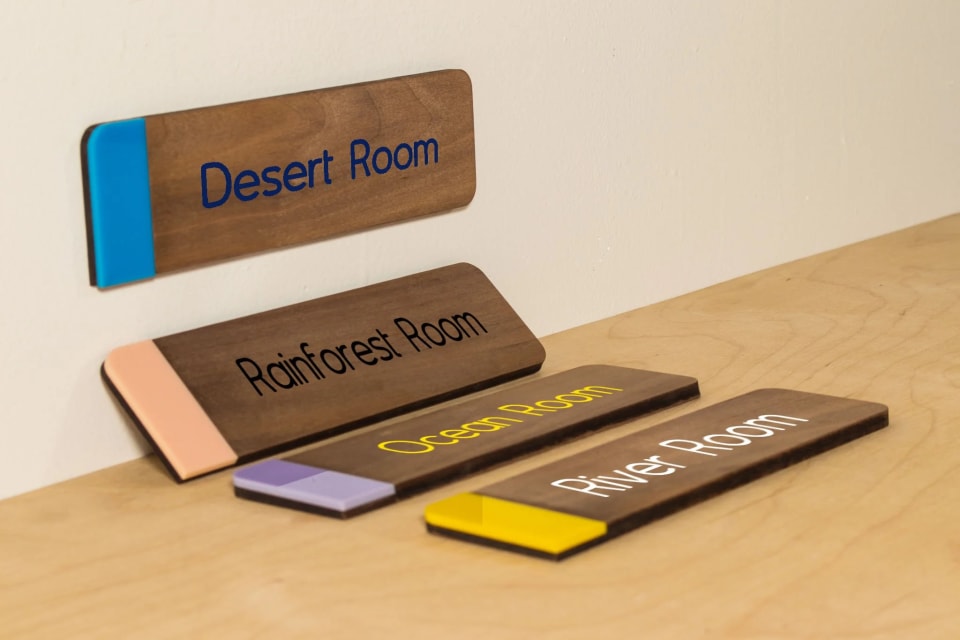

San Fernando publishes a Corridors Specific Plan with place-specific standards. The project team should confirm the actual address and applicable planning area before approving sign dimensions or appearance.
Provide the approved elevation, final panel dimensions and thickness, artwork, colors, finish, edge and hole details, quantities, labels, and installer-defined support or mounting interface.
No. For work connected with San Fernando, LA Prime Signs provides production and fabrication from approved inputs. The customer or qualified project team handles site verification, field dimensions, code and property review, permits, engineering, electrical work, access, mounting, and installation.
No. This is a production-market guide for orders connected with San Fernando; it does not claim a branch, staffed office, local crew, pickup point, delivery route, or field-service location.
Send the approved product, quantity, final dimensions, artwork, material, finish, exposure, packaging, and installer-handoff requirements.
Production only. The customer or qualified project team handles field verification, governing approvals, code compliance, engineering, access, mounting, and installation.